UK guide · Published by Qualash · Reviewed 18 September 2026
Eyelash serums, explained without the marketing.
Lash serums are among the most searched and least understood products in British beauty. Some formulas condition. A small number are prescription medicines. Most advertising treats that distinction as an inconvenience.
This guide sets out what each ingredient family is designed to do, which claims are permitted on the UK market, how to apply a serum without irritating the eye, and what a realistic twelve-week timeline looks like. It is published by Qualash, which makes one of the serums discussed here; we flag that wherever it matters.
The short answer
Conditioning is cosmetic
Peptide, panthenol and amino-acid formulas act on the condition of the lash fibre and the skin around the follicle. Lashes look denser largely because fewer of them snap mid-cycle.
Growth is medical
Bimatoprost is the only substance licensed in the UK for treating eyelash hypotrichosis, and it is prescription-only. A cosmetic promising measured growth is overstating its position.
Consistency beats price
A £24 serum used nightly for three months will out-perform an £80 serum used twice a week. The variable that best predicts satisfaction is adherence, not the ingredient list.
01 — How they work
What a lash serum can and cannot change
Eyelashes grow on a cycle far shorter than scalp hair. The active growth phase, anagen, lasts roughly four to ten weeks and covers only a minority of lashes at any moment. Catagen is a brief transition. Telogen, the resting phase, can run three months or more before the lash releases. Full turnover of an upper lash line therefore takes somewhere between four and eleven months depending on the individual.
Two consequences follow. Nothing applied topically shortens that cycle, so no serum delivers a new lash line in a fortnight. And the lashes you see today were largely determined months ago, which is why the honest assessment window for any serum is twelve weeks rather than two.
Where a well-formulated conditioning serum earns its place is in reducing attrition between phases. Lashes are thin and mechanically fragile. Heated curlers, waterproof mascara, oil-based removers, rubbing at the eye and nightly friction against a pillow all break lashes long before they would naturally shed. A humectant and peptide film improves flexibility, so more lashes reach their natural length. The visible outcome, a fuller and glossier line, is real. The mechanism is retention rather than stimulation.
The second thing a serum can do is improve the skin at the lash line. The follicle sits in tissue that responds to hydration and barrier support like any other skin. Reducing low-grade irritation from make-up residue or a poorly removed mascara gives the follicle a less hostile environment, which is a modest but genuine contribution.
Anagen · 4–10 weeks
Active growth. Around a third of upper lashes sit here. The only phase in which length increases.
Catagen · 2–3 weeks
Transition. The follicle contracts and growth stops. Lashes pulled out in this phase regrow slowly.
Telogen · 3+ months
Rest, then shed. The majority phase, and the reason serum results arrive slowly and fade slowly.
Practical reading: a serum that looks like it did nothing at week four is on schedule, not failing.
02 — Ingredients
The five families behind almost every formula
Strip the marketing from a UK lash serum and a short list of recurring actives remains. Knowing which family a product belongs to tells you more about its likely behaviour than any claim on the carton.
Family 01
Signal peptides
Short amino-acid chains — myristoyl pentapeptide-17, myristoyl hexapeptide-16, acetyl tetrapeptide-3 — usually carried on a fatty acid so they stay at the lash line rather than washing off.
Expect: the best-documented cosmetic option, with supplier testing showing improved lash condition and reduced breakage across eight to sixteen weeks. Well tolerated by most users.
Family 02
Humectants and film formers
Panthenol, sodium hyaluronate, glycerin, hydrolysed keratin and hydrolysed wheat protein. Unglamorous, and responsible for most of the shine people notice first.
Expect: flexibility within two to four weeks, which lowers the snap rate. A serum with none of these will feel thin and perform poorly whatever its peptide content.
Family 03
Botanical extracts
Swertia japonica, ginseng, nettle, pea sprout, red clover and liquorice root. Included for antioxidant and soothing positioning, occasionally on the back of genuine follicle research.
Expect: supportive rather than decisive. Extracts are also the most common source of sensitisation, so patch testing matters more with botanical-heavy formulas.
Family 04
Vitamins and cofactors
Biotin, niacinamide, vitamin E and pantothenic acid derivatives. Biotin is a marketing anchor above all: deficiency affects hair, but applying it to the lash line does not correct a deficiency you do not have.
Expect: modest. Useful inside a complete formula, weak as a headline. Read "biotin lash serum" as a description, not a claim.
Family 05 · read carefully
Prostaglandin analogues
Isopropyl cloprostenate, dechloro dihydroxy difluoro ethylcloprostenolamide, and prescription bimatoprost. These are the compounds behind the dramatic results circulated online.
Expect: the strongest effect and the real side-effect profile. Not permitted in UK cosmetics; bimatoprost is a prescription medicine dispensed under clinical supervision.
Reading a label
Four quick checks
Is a peptide named specifically rather than as a "complex"? Do humectants appear in the first half of the list? Is the brush a fine liner rather than a mascara wand? Is there a UK Responsible Person address on the carton? Four yeses is a reasonable purchase.
03 — Peptides vs prostaglandins
The only comparison that really matters
Almost every argument about lash serums is really this argument. One family conditions what is already there. The other acts on the follicle itself and belongs in a clinical conversation. Confusing them is how shoppers end up disappointed or, less often, in an eye clinic.
Peptide conditioning serums
Cosmetic · sold freely in the UK
- Acts on
- The lash fibre and the skin at the lash line. Condition, flexibility and hydration.
- Visible change
- Gloss and softness by week four; apparent fullness by week eight to twelve as breakage falls.
- Side effects
- Mostly mild and application-related: stinging if the product reaches the eye, occasional contact sensitivity to preservatives or extracts.
- Permitted claims
- Conditions, strengthens the appearance, lashes look fuller. Not "grows", "regrows" or "increases length".
- Best for
- Lashes damaged by extensions, curlers or waterproof mascara. Anyone wanting a low-risk nightly step.
Prostaglandin-analogue products
Medicine · prescription route in the UK
- Acts on
- The follicle: prolonging the growth phase and increasing the proportion of lashes in anagen.
- Visible change
- Measurable length and density change, typically from week eight, sustained while treatment continues.
- Side effects
- Conjunctival redness, itch, darkening of the eyelid skin, and in some cases periorbital fat loss. Iris pigmentation change is linked to drops used in the eye, not lash-line application.
- UK status
- Isopropyl cloprostenate is not permitted in cosmetics placed on the UK market. Bimatoprost requires a prescription and eye-pressure history to be considered.
- Best for
- Diagnosed hypotrichosis, discussed with a clinician. Not a routine beauty purchase from an overseas marketplace.
04 — Comparison
Formula types on the UK market
Product names change every season, so this table compares formula categories rather than brands. Match the row to the ingredient list on the carton in front of you.
| Formula type | Key actives | Typical UK price | Time to visible change | Extension-safe | Watch for |
|---|---|---|---|---|---|
| Multi-peptide conditioner | 3–5 named peptides, panthenol, hyaluronate | £35–£90 | 8–12 weeks | Usually yes | "Peptide complex" with nothing named |
| Single-peptide budget serum | One peptide plus glycerin and water | £12–£30 | 10–14 weeks | Usually yes | Thin texture, wasteful wand applicator |
| Botanical and vitamin blend | Swertia, ginseng, biotin, niacinamide | £18–£45 | 10–16 weeks, variable | Check for oils | Sensitisation; patch test first |
| Castor and plant oil blend | Ricinus communis oil, argan, vitamin E | £6–£20 | Cosmetic gloss only | No | Milia and blocked glands with heavy use |
| Prostaglandin-analogue cosmetic | Isopropyl cloprostenate and similar | Imported, varies | 6–10 weeks | Yes, but see note | Not permitted in UK cosmetics |
| Prescription bimatoprost | Bimatoprost 0.03% | Private prescription | 8–16 weeks | Clinician's call | Eye-pressure history; ongoing supervision |
Prices are indicative UK retail ranges for a tube lasting roughly three months, checked September 2026. Timings describe when most users report a noticeable difference, not a guaranteed outcome.
05 — Top three
Top 3 eyelash serums in the UK
Three conditioning serums that come up most often in UK searches. Ranking reflects how readily each one can be assessed against the criteria in this guide: named peptides, a fine liner applicator, a UK Responsible Person and clear cosmetic claims. Disclosure: this site is published by Qualash, so the first entry is our own product. The other two are competitors we have no commercial relationship with.
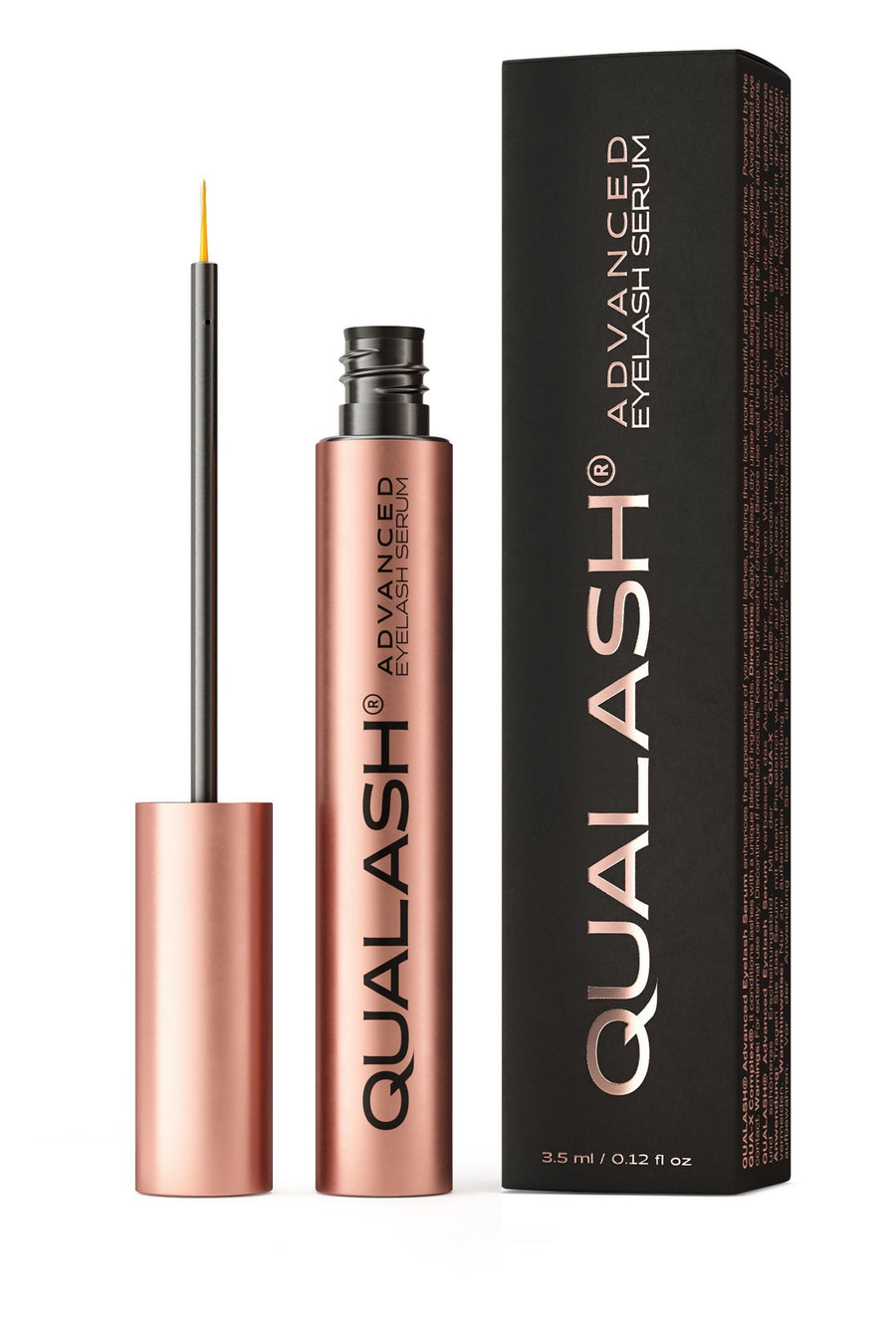
Qualash
A multi-peptide conditioning serum in the current British idiom: peptides named individually on the carton, humectants high in the list, and a fine liner brush rather than a wand. The formula is water-based and oil-free, which makes it workable during the rest period between extension sets.
- Category
- Multi-peptide conditioner
- Assessment window
- 8–12 weeks, nightly
- Best for
- Lashes recovering from extensions, curlers or waterproof mascara
UKLash
A British direct-to-consumer serum with a large user base, which is useful in itself: a wide pool of reports makes the common experience easier to read. Sits in the peptide-plus-botanical territory, so a forearm patch test for two nights is worth the delay before going near the eye.
- Category
- Peptide and botanical blend
- Assessment window
- 10–14 weeks, nightly
- Best for
- First-time users wanting a mainstream UK option with subscription pricing
RevitaLash
The oldest name of the three and the most widely sold through salons and pharmacy counters. Formula composition has varied by market over the years, so check the ingredient list and the Responsible Person details on the carton you are actually buying rather than relying on an older review.
- Category
- Peptide conditioner, salon channel
- Assessment window
- 8–12 weeks, nightly
- Best for
- Buyers who want professional-channel supply and a long market record
All three are cosmetic conditioning products, not medicines, and none is claimed here to grow lashes. Prices vary by retailer, promotion and subscription plan, so check the current figure on the official store; formulations change too, so verify the ingredient list, the applicator and the UK Responsible Person address on the carton before buying. Links go to each brand’s own store; none are affiliate links. Qualash is our own brand, so treat its position as the publisher’s view, not a neutral verdict. Ordering reflects our reading of the criteria in this guide, not a measured performance trial.
06 — Application
Four steps, sixty seconds, once a night
Most disappointment with lash serums comes from application rather than formulation. Too much product, applied to damp skin, over mascara residue, every other night.
Cleanse completely
Remove all eye make-up and cleanse the lash line. Serum applied over mascara or cleanser residue never reaches the skin, which is where it needs to be.
Dry fully
Wait until the lash line is completely dry. Damp skin dilutes the formula and makes it far more likely to migrate into the eye overnight.
One stroke per eye
Draw a single thin line along the upper lash line, inner to outer corner, as you would a fine eyeliner. Nothing on the lower lashes and nothing on the waterline.
Blot, then wait
Blot excess with a clean tissue and leave two minutes before anything else. Once nightly. Keep going for twelve weeks before forming a view.
Four habits that undo the serum
Heated or manual curlers. Clamping a conditioned lash still snaps it. Skip curlers for the twelve weeks you are assessing.
Oil-based remover, rubbed. The rubbing does the damage, not the oil. Soak, hold for ten seconds, wipe downwards once.
Sleeping face-down. A night of friction removes more lashes than a fortnight of serum retains.
Waterproof mascara daily. Reserve it for occasions; the removal it requires is the problem.
07 — Results
What twelve weeks actually looks like
The timeline below describes what users of peptide conditioning serums most commonly report. Individual response varies with lash condition at the start, consistency of use, and how much mechanical stress the lashes take in daily life.
Weeks 1–4
Condition, not count
Lashes feel softer and hold mascara better. Shine is the first thing most people notice, and it comes from the humectants rather than the peptides.
No density change should be expected. If you see none, the product is behaving normally.
Weeks 5–8
Fewer casualties
Breakage drops, so fewer lashes appear on the cotton pad at the end of the day. The lash line starts to look more even, particularly at the outer corners where damage concentrates.
This is the point at which most people decide the serum is working, and it is largely retention.
Weeks 9–12
The honest verdict
A full cohort of lashes has now been treated through most of its cycle. If a serum is going to change how your lash line looks, it has done so by now.
Photograph week one and week twelve in the same light, same angle, no mascara. Memory is a poor instrument here.
After week twelve, maintenance matters more than intensity. Most users move to five nights a week without losing the benefit. If you stop entirely, treated lashes shed on their normal schedule and the lash line returns to its previous condition over one to two cycles. It does not get worse than it was before.
08 — Safety
Side effects, contraindications and when to stop
Commonly reported, usually mild
Transient stinging if the product reaches the eye, mild redness of the lid margin, and dryness where a preservative does not suit the skin. These are typically application problems: too much product, or application while the lash line is still damp.
Contact dermatitis around the eye is less common and usually traces to a botanical extract or fragrance. It resolves on stopping, but the product should not be reintroduced.
Stop and seek advice if
Redness, swelling or itching persists beyond a day or two after stopping; vision changes in any way; the skin of the eyelid darkens; the eye feels persistently gritty or dry; or you notice unexplained lash loss rather than gain.
Adverse reactions to a cosmetic sold in the UK can be reported to the retailer and to your local authority trading standards team. Suspected reactions to a medicine go through the MHRA Yellow Card scheme.
Speak to a professional first if
You have glaucoma or raised intraocular pressure, are using any prostaglandin eye drops, have had recent eye surgery, wear contact lenses continuously, have blepharitis or ocular rosacea, are undergoing chemotherapy, or are pregnant or breastfeeding.
Sudden lash loss, patchy loss or loss with eyebrow involvement is a clinical question, not a cosmetic one. A serum will not answer it.
09 — Questions
Frequently asked questions
Do eyelash serums actually work?
Cosmetic lash serums are conditioning products, and on that basis they do work: peptide, panthenol and protein formulas condition the lash fibre and the skin at the lash line, which can make lashes look fuller, glossier and less prone to breakage. Bimatoprost is the only substance licensed in the UK to treat eyelash hypotrichosis and it is prescription-only. A cosmetic serum is not a medicine and should not be described as growing lashes.
How long does a lash serum take to show a difference?
Most people notice condition changes such as softness and shine within two to four weeks. Any change in apparent density tends to appear between eight and twelve weeks, because the eyelash cycle runs roughly four to eleven months and only a minority of lashes are in the active growth phase at any moment.
Are prostaglandin-analogue lash serums allowed in the UK?
Substances such as isopropyl cloprostenate are not permitted in cosmetic products placed on the UK market. Products containing them are sometimes bought from overseas sellers, which also means no UK Responsible Person and no local recourse if something goes wrong. If a serum lists a prostaglandin analogue, establish whether it is a UK-compliant cosmetic or a prescription medicine supplied by a clinician.
Can I use a lash serum with eyelash extensions?
Water-based, oil-free serums are generally compatible with extensions because they do not degrade cyanoacrylate adhesive. Avoid castor oil and other oil-rich formulas while wearing extensions, and apply along the lash line rather than onto the extension itself. Many technicians recommend a conditioning serum specifically during the rest period between sets.
Do lash serums change eye colour?
Iris pigmentation change is associated with prostaglandin-analogue eye drops instilled into the eye, not with cosmetic peptide serums applied to the lash line. Darkening of the skin around the eye is the more commonly reported effect with prostaglandin analogues, and it is usually reversible after stopping.
Is a lash serum safe in pregnancy?
Safety data for lash serums in pregnancy and breastfeeding is limited, so many manufacturers advise against use. Speak to your midwife, GP or pharmacist before starting or continuing a serum.
How much should a lash serum cost in the UK?
UK lash serums generally sit between £20 and £90 for a tube lasting about three months. Price tracks peptide complexity, testing and packaging rather than effectiveness alone, so read the ingredient list before the price. A £25 serum with three named peptides and a fine liner brush is a better buy than a £70 serum built on a "proprietary complex".
What happens if I stop using a lash serum?
Conditioning benefits fade as treated lashes shed naturally, usually across one or two lash cycles. Lashes return to their previous condition rather than becoming worse than before. The impression of a crash is usually the contrast between conditioned lashes and untreated ones arriving behind them.
Can I apply a lash serum to my lower lashes or brows?
Lower lashes sit close to the waterline, so applying there raises the chance of product entering the eye. Many conditioning serums are also sold for brow use; check the label, since brow application involves different volumes and no risk of ocular contact.
Do I need to patch test a lash serum?
Yes. Apply a small amount to the inner forearm for two consecutive days before using it near the eye. Botanical-rich formulas and preservative systems are the most common sources of contact sensitisation, and the skin around the eye is the thinnest on the body.